
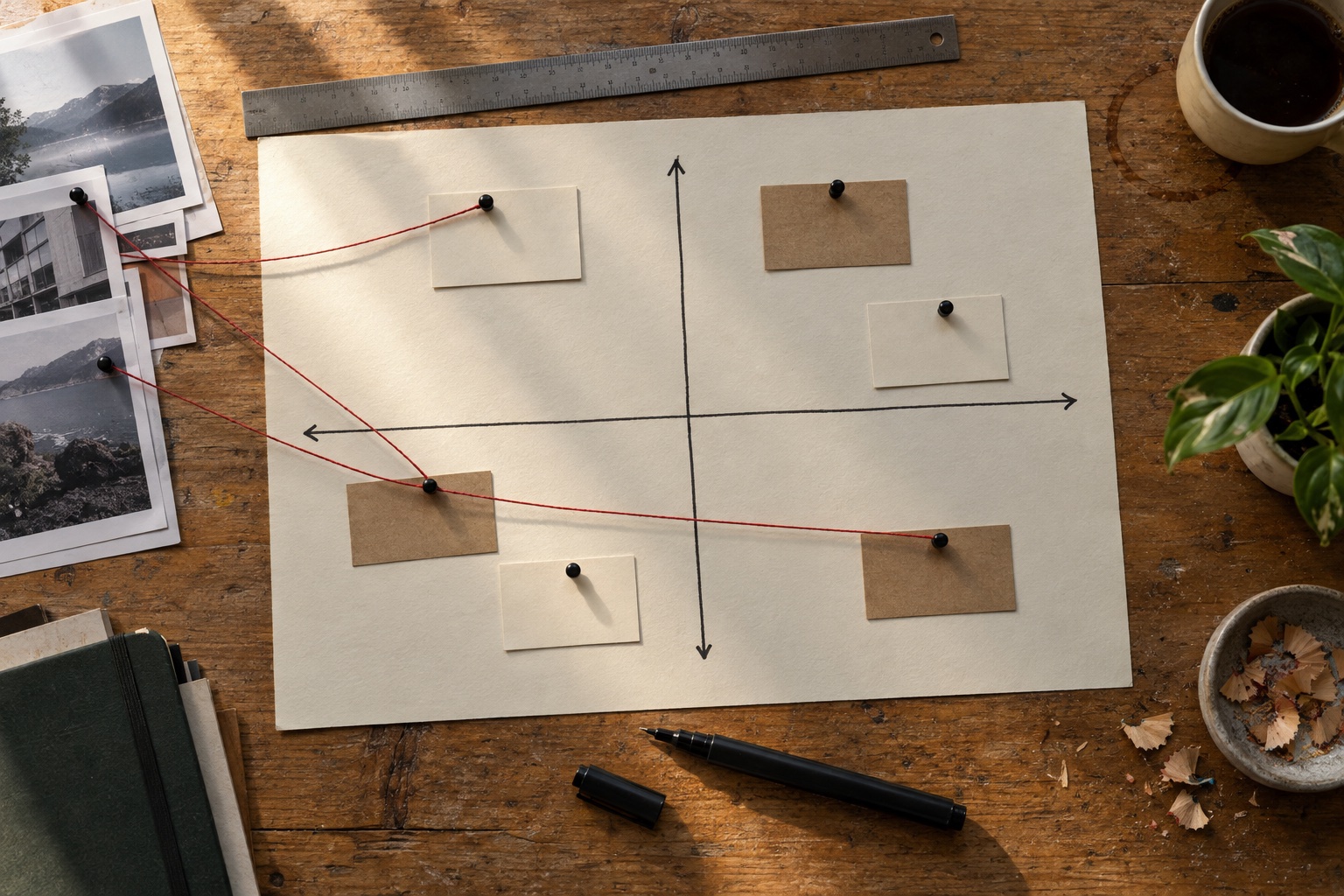
Market positioning is the decision of how a brand wants to be understood relative to the specific alternatives a buyer is actually comparing it against, not a tagline and not a mood. The positioning market is the group of strategists, agencies, consultancies, and in-house teams who get hired to make that decision and turn it into language, creative, and a system a company can actually use. If you are trying to figure out who to bring in for that work, here is what the positioning market actually covers, who operates in it, and what a real engagement should produce before you sign anything.
What "Positioning" Means Before You Enter the Positioning Market
A position is a specific, testable claim: who the product is for, what problem it solves better than the named alternatives a buyer would otherwise consider, and why that claim holds up under scrutiny. It is not the same thing as a mission statement or a brand voice, and it is not a tagline, though a good tagline is often what a strong position sounds like once it is compressed.
The test for a weak position is simple: hand it to two people and ask them to make a borderline creative call from it. If they land in different places, the position was never specific enough to guide a decision, it just sounded confident in the room where it was approved.
Who Operates in the Positioning Market
The positioning market is not one type of provider. It splits roughly into four groups, and the differences matter more than the label on the door.
- Brand strategy consultancies work positioning, naming, and messaging as a standalone deliverable, usually handing the resulting document to a separate design partner or an in-house team to express visually.
- Full-service branding agencies run the positioning work and the visual identity system together, one team carrying the claim from the strategy deck through to the logo, the type system, and the guidelines that keep it consistent. Our own guide to agency brand identity covers what that combined engagement should include.
- In-house marketing and brand teams define positioning internally, which works well when the domain knowledge is deep, but often loses the outside read on the competitive set that makes a position defensible against a real alternative rather than just a preferred one.
- AI-native creative studios run the same strategy-to-expression work, but exploration and testing move faster because concept generation is not gated by a production calendar the way a traditional shoot or design sprint is.
None of the four is categorically the right choice. The decision comes down to how much of the strategy work you already have settled, whether you need the visual system built by the same team that set the position, and how fast you need to move from claim to market.
What a Positioning Engagement Should Actually Produce
Whichever type of provider you hire, a real positioning engagement produces documented decisions, not a mood board:
- A written positioning statement naming the audience, the category, the specific claim, and the named alternatives it wins against, specific enough that two people reading it would make the same call on a borderline creative decision.
- A competitive frame that identifies who the brand is actually being compared to in a buyer's head, which is often narrower and stranger than the official competitor list in a pitch deck.
- Messaging pillars that translate the position into language a copywriter, salesperson, or new hire can reuse consistently without reinventing it each time.
- A rationale document explaining why the position is defensible, not merely preferred internally, so it survives the first hard question from a customer or a board member.
A provider that skips straight to a tagline or a moodboard without producing the above has skipped the actual work the positioning market exists to do. The tagline is the compressed output of a defensible position, not a substitute for one.
How We Approach Positioning at BMI Studios
We are an AI-native creative studio: we turn brand DNA into hyperreal creative, without the overhead of a traditional production. Positioning work sits inside Brand Design, one of six capabilities we build around, tagged on our own site as "Identity, built AI-native."
Every engagement, positioning included, runs through the same four steps: DNA, Build, Orchestrate, and Deliver, work we describe as capturing the brand as a system, building the pipeline, routing every frame to the right model, and finishing to a bar that holds at full screen. Two beliefs shape how we run that process specifically for positioning work: craft sets the ceiling, not the tool, and consistency is the hard part, so we build for it. A position that only holds up in the pitch deck and drifts the moment three different people write copy from it was never actually finished. It is also the standard behind our own line: we make brands impossible to ignore, which is itself a position, not a slogan we wrote first and rationalized afterward. More on how the six capabilities fit together is on our what we do page.
What to Look for When Comparing Providers in the Positioning Market
Before you sign with anyone in the positioning market, ask to see:
- An actual positioning statement from a past project, not the pitch deck version, so you can see whether the format holds up as a working document rather than a presentation slide.
- How they test a position against real customer language, not just internal conviction, since a claim that only survives inside the building rarely survives contact with a buyer.
- What happens after the document is delivered. Some providers build the expression themselves; others stop at the strategy and hand it off. Confirm which one you are hiring before the engagement starts, not after.
- How they handle internal disagreement. A position that generated no real debate on the way to being finished usually was not stress-tested hard enough to be defensible later.
Treat any timeline you are quoted before scoping as illustrative. Positioning work varies too much by how contested the category is, and how much research it takes to confirm a claim actually holds, for a general estimate to mean much before that scoping happens.
Frequently Asked Questions
What is the difference between market positioning and brand strategy?
Positioning is the specific, testable claim about who you are for and why you win against named alternatives. Brand strategy is broader: it includes positioning plus the audience definition, brand architecture, and business goals the positioning has to serve. Positioning is the sharpest, most testable piece of brand strategy, not a separate discipline from it.
How long does a positioning engagement take?
It depends on how contested the category is and how much research it takes to confirm a claim actually holds up against real competitors and real customer language. Get a timeline against your specific project once it is scoped, not a general answer from a first call.
Can I do positioning in-house instead of hiring into the positioning market?
Yes, if someone on the team can genuinely read the competitive set from outside the building and is willing to test the position against real customer language rather than internal opinion. The risk with in-house positioning is usually not a skill gap, it is proximity: it is hard to see your own category clearly from inside it.
How is AI changing the positioning market?
It is changing how fast a position can be tested and expressed, since concept exploration and creative production move faster once they are not gated by a traditional production calendar. It does not change what a real positioning engagement has to produce. A defensible claim about who you are for and why you win still has to come from research, a real competitive read, and judgment, not a model.
Choosing a Partner
A position only works if it holds up once it is actually written down and tested against a real customer conversation, not just a pitch deck in a conference room. If you are evaluating partners in the positioning market for a strategy, identity, or full rebrand project, talk to our team about what that would look like for your brand.