
A marketing campaign is a coordinated set of messages, formats and placements built around one idea and run for a defined period. The eight marketing campaign examples below show the main ways brands pull that off: by building a durable brand idea, by getting customers to take part, and by taking a stand or staging something people talk about. Each one is grouped by the job it did, so you can match an example to the problem you are solving instead of copying whatever looks impressive.
Each example describes the campaign's public format only. Results are left out on purpose: figures for famous campaigns circulate widely and often without a source, so check any number against the brand's own published material before you quote it.
What Makes a Marketing Campaign Worth Studying
A campaign is worth studying when you can state its idea in one sentence and trace how that sentence shaped every asset. That separates a campaign from a calendar of posts. Three questions sort the examples that follow:
- What was the single idea, and could a stranger repeat it back?
- Which format carried it, and why did that format suit the audience and channel?
- What would a team need to produce to run it, and how many versions of the work did it call for?
If you are looking for individual actions rather than whole campaigns, the companion list of marketing tactics examples covers 12 of them. A campaign is what you get when a few tactics share one idea.
Marketing Campaign Examples That Built a Brand Idea
These campaigns gave a brand a position that outlasted any single execution. The format changed over time; the idea did not.
Nike, "Just Do It". Launched in 1988, the line is short enough to attach to almost any athlete, sport or story. The campaign is a lesson in writing an idea with room in it: a tagline that asks for a decision rather than describing a product can carry creative across very different executions. Take away: build the idea so new work can slot into it without rewriting it.
Dove, Real Beauty Sketches. Dove has built its communication around showing real women instead of idealised models, and this film is one of the best-known executions. A forensic artist sketched women from their own descriptions of themselves, then again from a stranger's description, and the film placed the two portraits side by side. Take away: when the idea is a point of view, a single well-made film can dramatise it better than a claim ever would.
Apple, Shot on iPhone. Billboards and ads built from photographs taken by iPhone owners, credited to the people who took them. The product's camera quality is demonstrated by the work itself rather than described in copy. Take away: if your product makes things, let the output be the advertisement.
Marketing Campaign Examples That Made Customers Participants
The campaigns in this group only worked because audiences supplied part of the content: their names, their data or their replies.
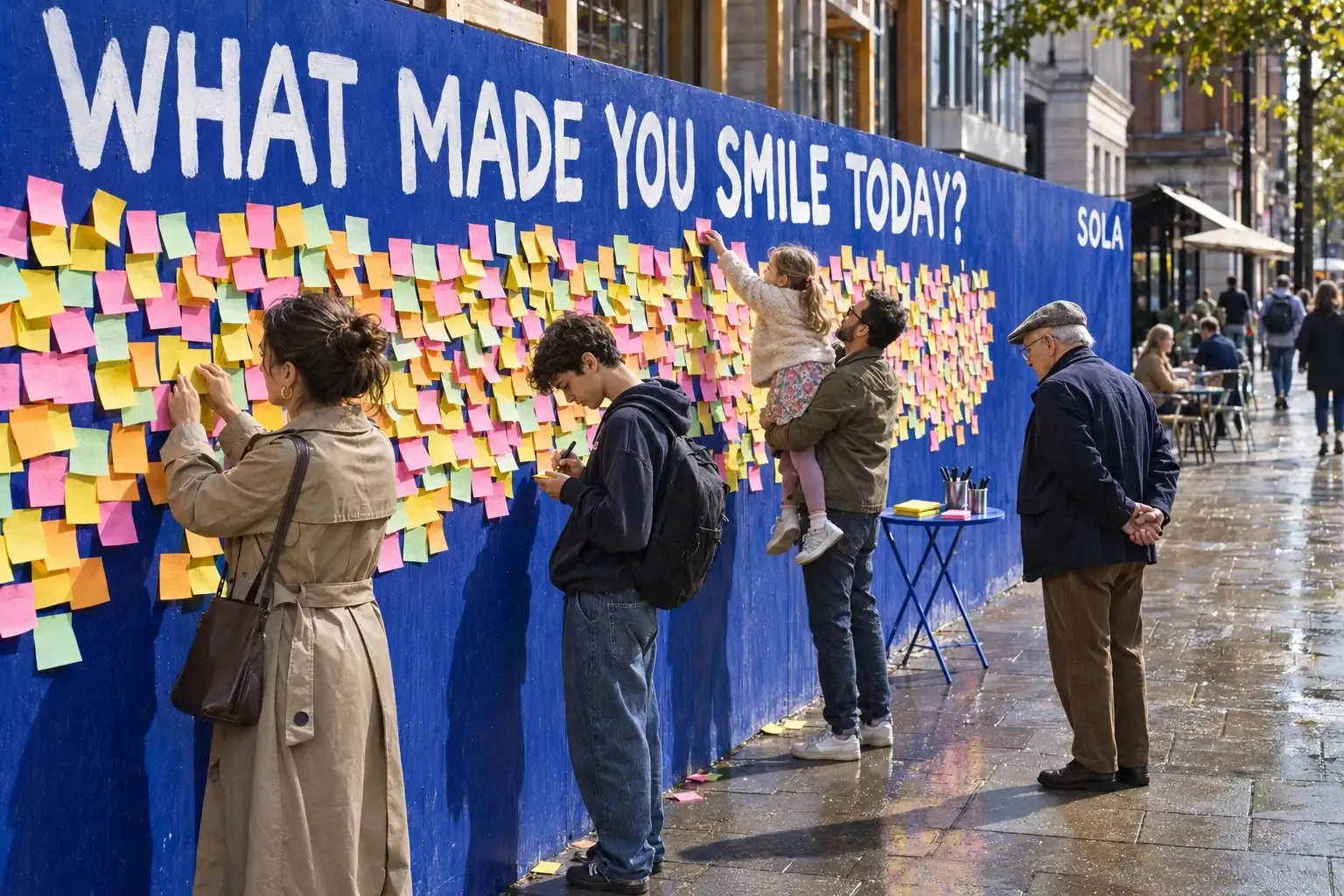
Coca-Cola, Share a Coke. The usual label gave way to popular first names printed on bottles, which turned a mass product into a personal one and gave people a reason to look for their own name or buy one for someone else. Take away: personalisation works best when it is physical or visible enough that people want to show it off.
Spotify, Wrapped. Each listener receives a personal summary of their own year of listening, designed to be shared. The creative is generated from the customer's own data, so every listener is effectively the subject of the campaign. Take away: a campaign can be a product feature, and the audience's own data is the most relevant creative a brand has.
Old Spice, "The Man Your Man Could Smell Like". A television spot with a distinctive tone, followed by short personalised video replies to people who had commented on social media. The second phase turned a broadcast ad into a conversation. Take away: plan the follow-up assets before launch, because reacting quickly only works when production can keep up.
Marketing Campaign Examples That Took a Stand or Staged a Moment
These examples spent less effort describing the product and more effort doing something worth covering.
Patagonia, "Don't Buy This Jacket". A Black Friday print ad that asked readers to think before buying a new jacket, and to repair and reuse instead. The message sat uncomfortably close to the company's own revenue, which is what made it believable. Take away: a stand only persuades when it costs the brand something and matches how it already behaves.
Red Bull, Stratos. Red Bull backed a skydiver's jump from the edge of space and broadcast it live. The brand functioned as the producer of the event rather than the sponsor of a message. Take away: a brand with a clear territory can make the content itself the campaign, provided the territory is specific enough to stage something credible inside it.
What These Marketing Campaign Examples Have in Common
Set side by side, the eight campaigns share four traits, and none of them is a bigger budget.
- One idea, stated plainly. Each can be summed up in a sentence without naming the product.
- A format chosen for the channel. A film, a print ad, a bottle label, a personal summary and a live broadcast are different answers to the question of where the audience already pays attention.
- A built-in reason to share. Each gave people something to forward, repeat or point at.
- A repeatable asset system. The idea held up across many executions: new athletes, new names, new listeners, new replies.
The fourth trait is the one brand teams most often underinvest in, and it is where production decides how far an idea travels.
How to Choose a Campaign Model for Your Brand
Use the examples as models rather than templates. A workable order for a brand team:
- Write the one-sentence idea first. If it needs the product name to make sense, it is still a message, not an idea.
- Pick the job. Decide whether the campaign must build a brand position, create participation, or earn attention, using the three groups above.
- Choose the format and channel together. A participation mechanic needs somewhere visible for people to take part; a stand needs a medium that suits a statement.
- Plan the variant set before launch. List every crop, length, language and colourway the idea will need, so the production plan matches the creative ambition.
- Decide what you will measure before the work goes live. Pick the signal that matches the job: recall for a brand idea, participation for a mechanic, coverage for a stunt.
For a view of how generative tools fit that production plan, see the practical guide to generative AI in marketing for brand teams and the breakdown of how brands produce AI ad creative.
The Production Side of a Campaign
Look again at the examples and a pattern shows up that the creative summaries hide: nearly every one asked for volume. Names on labels, replies to individual commenters, a different summary for each listener, photographs from many owners. A campaign idea is cheap to write down and expensive to execute at the scale the idea demands.
BMI Studios is an AI-native creative studio. We turn brand DNA into hyperreal creative, without the overhead of a traditional production. For a campaign, that means the variant set in step four can be planned as part of the creative rather than treated as a cost to be trimmed. You can see how the studio is organised on the what we do page.
Frequently Asked Questions
What is a marketing campaign?
A marketing campaign is a coordinated set of messages, formats and placements built around one idea and run over a defined period to achieve a specific goal, such as building awareness, launching a product or driving participation.
What makes a marketing campaign successful?
A clear single idea, a format that fits the channel and audience, a built-in reason for people to share or respond, and a measurement plan agreed before launch. Budget helps, but none of the examples above depends on size alone.
What are the main types of marketing campaign?
The most common are brand awareness campaigns, product launch campaigns, seasonal or promotional campaigns, participation or user-generated campaigns, advocacy or cause campaigns, and retention campaigns aimed at existing customers.
What is the difference between a marketing campaign and a marketing tactic?
A tactic is one specific action, such as a retargeting ad or an email sequence. A campaign coordinates several tactics around a shared idea. The marketing tactics examples guide covers the individual moves.
How long should a marketing campaign run?
There is no fixed length. A campaign runs as long as the idea keeps producing fresh executions. Some are built for a launch window; others are designed as a long-running platform that new work can be added to.
If you have a campaign idea and need the production capacity to run it across every format it needs, talk to BMI Studios.