
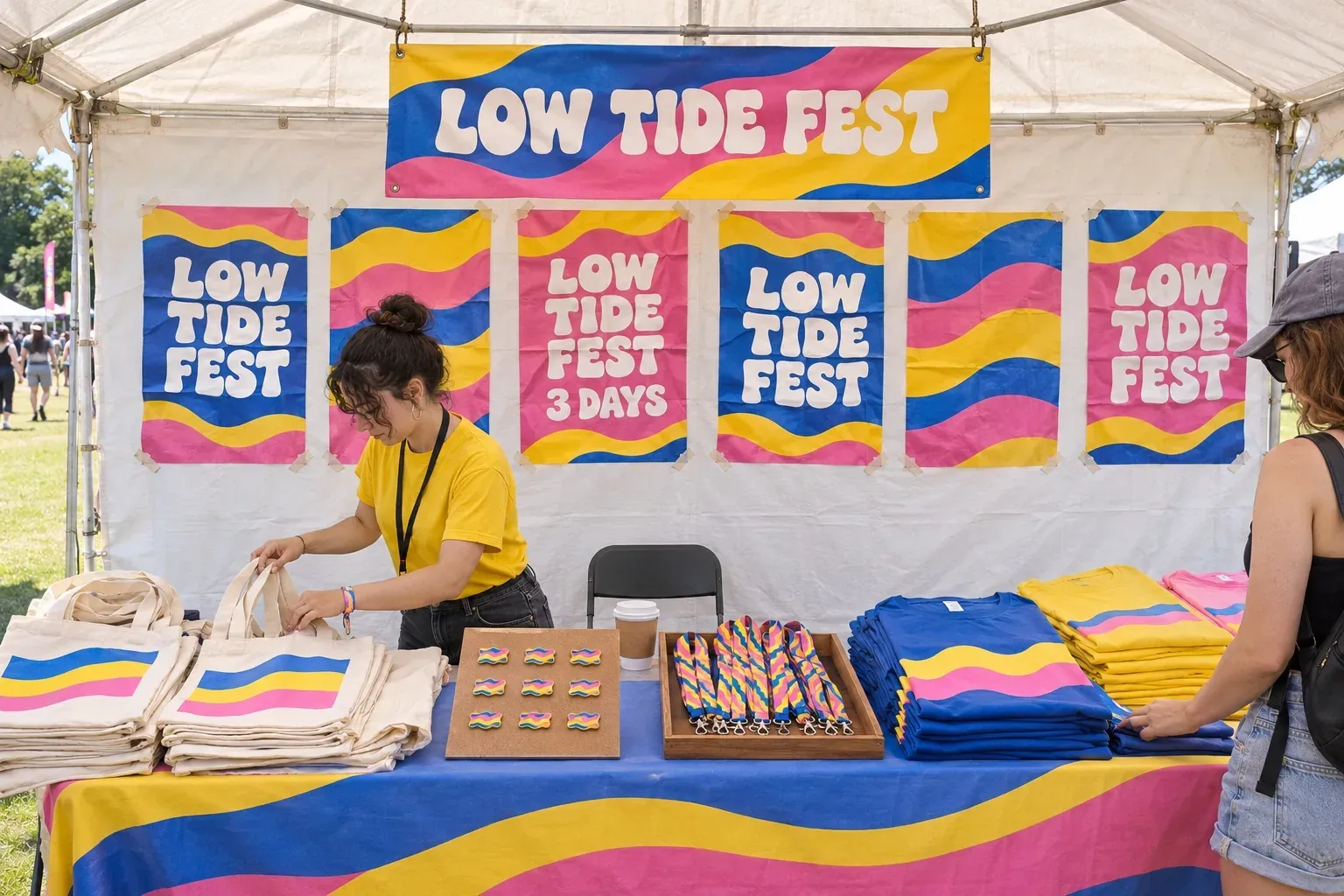
An agency for graphic design is a team that designs and produces the visual material a brand puts in front of people: the identity system, campaign graphics, web and social assets, presentations, packaging layouts, and the files that keep all of it consistent. What separates an agency from a single designer is that strategy, art direction and production capacity sit in one place, and one party is accountable for the finished result. This guide covers what the work includes, how an agency compares with a freelancer or an in-house hire, what to look for in a portfolio, and the questions worth asking before you sign.
What an Agency for Graphic Design Does
An agency for graphic design takes a brief and returns finished, usable visual work across every format the brand needs. In practice the services fall into a handful of groups:
- Brand identity. The logo, color palette, type system, imagery rules and the guidelines that document them. Agency brand identity explains what a complete system includes and how to judge one.
- Campaign and advertising design. Key visuals for a launch or a promotion, plus the resized and adapted versions each channel needs.
- Digital design. Website and landing page graphics, social templates, email headers, app store and marketplace assets.
- Print and packaging layout. Artwork prepared for a printer or a packaging supplier, with the technical file setup that avoids a costly reprint.
- Presentation and sales material. Pitch decks, one-pagers, reports and proposals that look like they came from the same company.
- Production and adaptation. Versioning, localization, resizing and file preparation after the design is approved. For most brands this is where the hours actually go.
Not every agency covers all six. Some specialize in identity and hand off production, others are built around high-volume campaign work. Knowing which half of that spectrum you need is the first filter.
Agency, Freelancer, In-House Designer or Design Subscription
The right model depends on how much design you need, how steady the demand is, and who will be directing the work. Each option fits a different situation:
- Agency. Best when the work needs strategy and execution together, spans several formats, or has to scale up and down with campaigns. You get a team with different specialties and a single point of accountability. You also pay for that structure.
- Freelancer. Best for a well-defined project with a clear brief, such as a single piece of collateral or a one-off illustration. The risk is capacity: one person has a limit on how much they can produce, and continuity depends on their availability.
- In-house designer. Best when design demand is constant and the person can learn the brand deeply. One hire covers a narrow range of skills, so identity work, motion and production often still go outside.
- Design subscription service. Best for a steady queue of small, repeatable requests. These services usually work from a request queue and give you less strategic input.
Many brands end up with a mix: an in-house lead, an agency for identity and campaigns, and a freelancer for overflow. For a closer look at how AI-assisted and traditional models differ, see AI creative agency vs. traditional agency.
What to Look for in a Graphic Design Agency
A polished portfolio shows that an agency can produce good-looking work. It does not show that the agency can solve your problem. When you review candidates, check for these:
- Work that resembles your problem. A strong consumer packaging portfolio says little about a B2B software brand. Look for projects with a similar audience, scope or complexity.
- Range inside a single client. One logo is easy to show. Ask to see how the same identity was applied to a website, a campaign, a deck and a social channel.
- A process you can see. The agency should be able to describe how a project moves from brief to concepts to revisions to delivery, and where you review work along the way.
- Clear scope and revision terms. Know how many rounds of changes are included, what counts as a new request, and what happens when the brief shifts midway.
- Handover quality. The deliverable is not only the artwork. It is the organized source files, the documented guidelines, and the ability for another team to apply the work later without calling the original designers.
- The people you will actually work with. Ask who will do the design and who will direct it, not only who presents at the pitch.
Questions to Ask Before You Sign
These questions surface the differences that do not show up in a portfolio:
- Who will work on my project, and how much of their time does it get?
- How do you handle feedback, and what happens after the included revision rounds are used?
- Which formats and channels do you produce for, and which do you hand off to someone else?
- What do I receive at the end: source files, guidelines, templates, licensed fonts?
- Who owns the final work and the source files, and when does ownership transfer?
- Which tools do you use, including any AI tools, and what are the commercial usage terms for anything generated with them?
- How do you price: per project, monthly retainer or hourly, and what is excluded from the quote?
Ask for the answers in writing. A reliable agency will have them ready.
How AI Is Changing Graphic Design Agency Work
AI has changed how quickly a graphic design team can explore and produce, and it has not changed who decides what is good. Generating many directions for a logo, a key visual or a layout is now fast, which means an agency can show you a wider range of concepts before narrowing the field. Production work such as resizing, versioning and adapting a layout across channels also moves faster when the pipeline is built for it.
What stays the same is the judgment. Someone still has to choose which direction fits the brand, refine it to a professional finish, and make sure the result is consistent across every use. For a deeper look at where that division of labor falls, read AI graphic design and brand work and what an AI creative agency is.
When you evaluate an agency that uses AI, ask three things: who reviews and approves every output before it reaches you, how the agency keeps the brand consistent across generated work, and what the licensing and ownership terms are for generated assets. Those answers matter more than which tool the agency happens to use.
How BMI Studios Approaches Graphic Design
BMI Studios describes itself as "an AI-native creative studio." Graphic design work sits inside its Brand Design capability, summed up on the site as "Identity, built AI-native," and its Creative Systems and Asset DNA capability, summed up as "Your brand, systematized." The studio works in four steps: DNA, Build, Orchestrate and Deliver, which it describes as capturing the brand as a system, building the pipeline, routing every frame to the right model, and finishing to a bar that holds at full screen.
The full list of capabilities is on what BMI Studios does, and finished projects are shown in the portfolio.
Frequently Asked Questions
What does an agency for graphic design do?
It designs and produces a brand's visual material: identity systems, campaign graphics, digital assets, print and packaging layouts, presentations, and the production work that adapts approved designs to every format. It also provides art direction, so the work stays consistent across all of it.
How much does a graphic design agency cost?
It depends on scope, and any specific figure without a scope is a guess. Agencies commonly price per project, on a monthly retainer, or hourly. A project fee suits a defined deliverable such as an identity system, a retainer suits ongoing campaign and production work, and hourly billing suits small or uncertain requests. Ask for a written quote that lists what is included and what is not.
Should I hire an agency or a freelance graphic designer?
Hire a freelancer for a clearly defined single project with a clear brief. Hire an agency when the work needs strategy and production together, spans several formats, or has to scale with campaigns and handle volume.
Do I own the designs an agency creates?
It is a contract question, not a universal rule, so settle it in writing before work starts. In many standard agreements, ownership of final approved assets transfers to the client on full payment, and the agency may keep the right to show the work in its portfolio. Confirm the same for source files and for any AI-generated assets.
What should I prepare before contacting a graphic design agency?
Have a short brief ready: what the brand is, who the audience is, which deliverables you need, where they will be used, your timeline and your budget range. Include examples of work you admire and work you dislike. The clearer the brief, the more accurate the quote.
If you are weighing agencies for a graphic design project, contact BMI Studios to talk through what you need.